Jessica Oliver
She/her
Evidence based therapy for anxiety,
trauma and professional stress in Lee’s Summit
and online throughout Missouri.
.
Jessica Oliver MSW, LCSW
I’m a Licensed Clinical Social Worker who works with teens and adults from all walks of life who have been through something that feels overwhelming. My goal is to help you stop dwelling on negative thoughts and start helping you get back to living life.
Who I Am
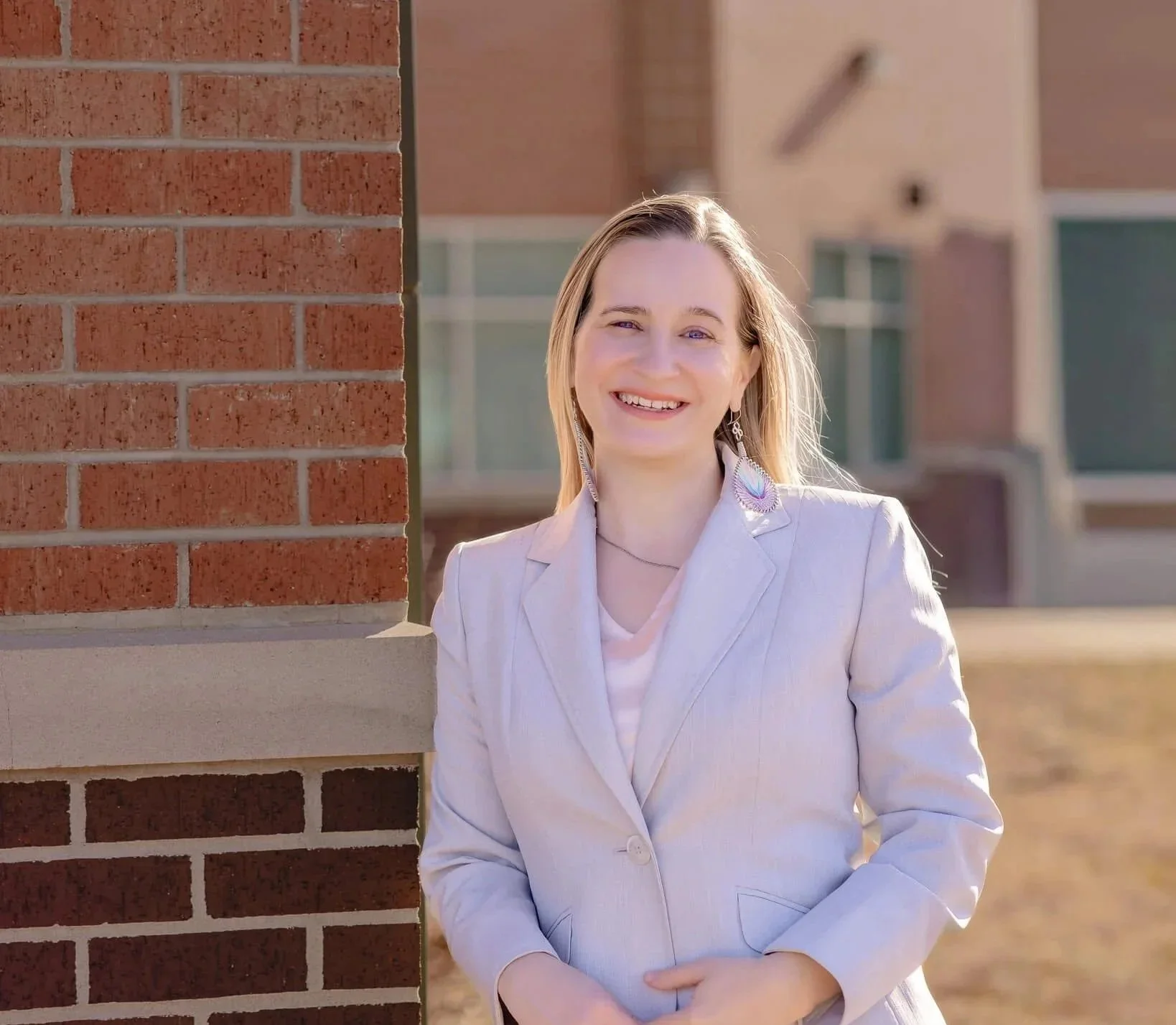
I'm Jessica Oliver, MSW, LCSW. I am a Licensed Clinical Social Worker with more than 15 years of experience helping people heal from trauma and anxiety. I founded Aspire Counseling in 2017 because I believed there was a better way to do therapy: evidence-based, deeply personal, and built around what actually helps people get better.
I still see clients myself every week. That's the part of this job I love most. As the Director, I handle the business side too. However, when I'm in the room with a client, that's where I feel most like myself. I care deeply about the people I work with and I never take lightly the trust they give us as therapists when they step into our office.
I also make a commitment to my clients that I take seriously: if I can't show up 100%, I'll ask to reschedule. That rarely happens. However, I think my clients can feel that difference. It’s my hope that they feel that they are my priority every minute we’re working together.
I see clients in person at our Lee's Summit office and via telehealth throughout Missouri.
Who I Work With
My caseload tends to be adults who've been carrying something heavy for a long time — often trauma they've tried to push through on their own, or anxiety that's quietly started limiting their life in ways they didn't plan for.
A few groups I work with most often:
Survivors of sexual assault and trauma. This has been the core of my clinical work for over a decade. I've worked with many people, at many different stages of healing, who are ready to stop letting what happened to them define what's possible for them now.
High-achieving professionals with anxiety and stress. These are people who look fine on the outside — successful, capable, responsible — but internally they're exhausted. It often includes physicians, university professors and business owners. They're juggling a demanding career, family life, and a mental load that never seems to stop. They don't want to slow down. They just want to feel like themselves again.
College students and young adults navigating big transitions. Whether it's adjusting to college life, figuring out who you are after graduation, or feeling lost in a season that's supposed to feel exciting.
LGBTQIA+ individuals. Aspire Counseling is built to be welcoming and affirming to everyone, regardless of gender identity or sexual orientation. You deserve support that sees and respects all of who you are. A large portion of my caseload tend to identify as diverse in sexuality and/or gender identity.
If you've been thinking about therapy for a while but weren't sure if your situation was 'bad enough,' it probably is. Often, those who gain the most fro counseling are the ones who are ready to stop just managing and actually start healing.
How I Work
I use structured, evidence-based approaches. However, I don't apply them like a formula. I pay close attention to the words my clients use and check in regularly about what's working and what isn't. I explain my reasoning as we go, so you're never just doing something because I said so.
My style is warm but direct. I'll meet you where you are. And when you're ready, I'll gently push you a little further.
From the start, therapy requires a real relationship. In fact, research shows that the therapeutic relationship is the best predictor of if therapy “works.” So, I take that very seriously. We're equals working together on your healing. We'll set goals and create a plan — and I'll be thinking about that plan, and about you, between every session.
Treatment Approaches I Use
My focus is always on using well researched interventions in a way that honors the unique needs and preferences of a specific client. You deserve for me to use the types of treatment that will make a difference in your life. You are also a unique individual who deserves to be seen for who you are and have treatments tailored to your needs.
Cognitive Processing Therapy (CPT)
CPT is a highly researched, structured therapy for trauma that helps you identify the thought patterns that formed after something painful happened — and start to change them. I often use CPT as a starting point because it helps us zero in on a specific event and work through it in a focused, methodical way.
EMDR — Eye Movement Desensitization and Reprocessing
EMDR helps the brain process stuck memories — often without needing to talk through every detail of what happened. I completed full EMDR training in late 2019 and early 2020, with advanced polyvagal-informed EMDR training in 2025, EMDR-GRIEF training in 2026 and other advanced EMDR training from time to time. I often use EMDR after or alongside CPT, especially when trauma spans more than a single event.
Prolonged Exposure (PE)
I've been trained in Prolonged Exposure since 2013 and used it with great success for many years. Today I draw on it selectively. I’m most likely to use it for trauma involving significant dissociation, where current evidence suggests it may be the better fit. In general, PE is the gold standard because it truly works. But it’s also pretty intense and dysregulating so I often find I can use CPT or EMDR first.
Acceptance and Commitment Therapy (ACT)
I completed Level 2 ACT training in 2017. ACT is especially useful for clients caught in cycles of anxiety and avoidance. ACT helps them get unstuck not by forcing themselves to feel better, but by reconnecting to what matters most. I love using it to help people better connect with their personal values, accept the things in their life that need to be faced, be more present on a daily basis and get less stuck in their thoughts.
Dialectical Behavior Therapy (DBT)
I've been using DBT since 2008 and incorporating it fully since 2012 — first in hospital and school settings with high-acuity clients, and now selectively with clients who benefit from concrete skills for managing overwhelming emotions. Learning DBT was lifechanging for me, because it showed me how to help the clients other people became frustrated with. I liked it, because it’s structured. I love the individual skills. I love the concepts of helping meet people where they are through validation and the DBT change strategies. The emphasis on the therapist getting support impacted the way I think about every treatment we offer at Aspire Counseling. And my favorite part is that when my clients use a diary card I get a very quick overview of their week and what we may need to focus on that session.
Exposure and Response Prevention (ERP)
ERP is the gold-standard treatment for OCD. I was first exposed to this approach in 2017 and completed formal training in 2020. I draw on ERP when anxiety is showing up as intrusive thoughts or compulsive patterns that are taking over someone's day. We have other therapists who do a lot more OCD specific work than myself but I am fully trained and enjoy doing some ERP from time to time.
Exposure Therapy
Exposure therapy is one of the most well-researched treatments for anxiety. It works by gradually and safely approaching the situations, thoughts, or feelings you've been avoiding — rather than steering around them. Avoidance tends to feed anxiety over time; exposure helps break that cycle. I use this approach across a range of anxiety presentations, from panic and phobias to social anxiety and generalized worry.
Trauma Therapy Intensives
For clients who would rather focus intently on their trauma for a short period of time to get some quick movement than meet weeklly for longer, I offer trauma therapy intensives. This is the work I'm most passionate about.
Here's how it works: we meet twice a day for five days, take about a month apart, then come back for a second week of twice-daily sessions. You'll have homework each evening and in between the two weeks. It's immersive, focused work — and I do ask that clients take time off during intensive weeks so we can stay laser-focused on healing.
We center those weeks on your trauma. Not because nothing else matters, but because that concentrated focus is what creates real, lasting change in a short time. Many clients tell me they got further in two weeks than they expected to in months of regular therapy.
It's not the right fit for everyone. But for the right person, it can be life-changing. I’ve seen this make a huge difference in clients healing and really love doing this work.
My Background & Training
I earned my Bachelor of Social Work from the University of Missouri in 2008 and my Master of Social Work (MSW) from the University of New England in 2012. I've been licensed as an LCSW in Missouri for over 15 years.
Before founding Aspire Counseling, I worked at Fulton State Hospital and in a school setting with students facing significant emotional challenges. That experience gave me a deep respect for how much suffering people can carry. It also gave me a deep understanding of how much real relief is possible with the right support. I saw the power of believing in clients, often those who others had given up on. And I saw that with the right interventions, my clients could achieve things they never thought possible and often others had told them wasn’t possible.
Specialized training includes:
EMDR — Full training completed December 2019 / January 2020; advanced EMDR trainings each year since
Cognitive Processing Therapy (CPT) — Trained around 2017 initially with additional trainings since
Prolonged Exposure (PE) — Trained 2013
Acceptance and Commitment Therapy (ACT) — Level 2, 2017
Exposure and Response Prevention (ERP) for OCD — First exposure 2017; formal training completed 2020
Dialectical Behavior Therapy (DBT) — Training began 2008; fully integrated into clinical practice by 2012
I go well beyond the minimum continuing education required. I regularly attend trainings and conferences focused on trauma and anxiety — because I want my clients to have access to the best tools available.
A Little About Me
I know, from the inside, what it's like to be someone who holds a lot together. I also know what it's like to finally let yourself be helped. Stressful periods of my own life have come in waves. And each time, I’ve found that finding professional support, as well as building up my personal support system, has been key to finding myself stronger on the other side of the stress.
I've been a traveler my whole life. As a kid, we went to Mexico regularly. My first trip to Europe was as a teenager and I was actually in London during the subway bombings in 2005. I also spent a month in China in college when my roommate went home to China for Winter Break. Perhaps the thing most people are surprised by is that in 2024, I took six months off to travel the world with my kids. We started in Rome making several stops in the Mediterranean, then around Africa (Namibia ended up being a surprise favorite, though I also loved Kenya, Madagascar and South Africa), through Brazil all the way up the Amazon where we swam with pink river dolphins, to Iceland where we caught the northern lights right at the end of the season, and into Europe — Holland, Germany, a week in Paris. Currently, I spend time in England every couple of months and visit other parts of Europe when I can. This year I'm making two trips to India for the first time.
Travel has given me a lot of things. It’s given me perspective, patience (I certainly didn’t hav emuch patience naturally but have learned to have a little), and a genuine curiosity about how differently people experience the world. My dad used to view the world as a sandbox and said we can’t see the whole picture if we only play in one little part. He encouraged us to visit as many parts of the world “or sandbox as he called it) as we possibly could. He explained we’d be better people if we saw how different people live. That’s true. And I also I think it makes me a better therapist.
I love to cook — especially things people assume are hard, like homemade pasta, a really good meatloaf, or Indian food. (I do not bake. Not my thing.) I don’t always have time to cook, but when I do it truly makes me happy. And both of my kids have been helping me in the kitchen since they were about 2 years old!
I love the feel of sunshine on my face, the smell of fresh air, and the freedom of being outside in all sorts of contexts. My kids and I ride bikes together, eat dinner outside as a picnic when the weather is nice, and hike when we can. We have season passes to Worlds of Fun for a little excitement throughout the summer.
My kids are my whole world. I’m the professional mom balancing a full time job with being active in my children’s education, spending quality time with my significant other and staying connected to extended family. I’m also lucky enough that my mom and grandma live next door. Anytime I have a bad day, I head next door and my 90 year old Grandma makes me laugh until the world seems positive again.

Why I Became a Therapist
I was about 12 when I figured out this was what I wanted to do. I was a pretty reserved kid compared to my friends. However, my friends started coming to me when things were hard. They told me things they didn’t tell each other. And they said this was because I listened and I actually cared. I noticed pretty quickly that just telling someone what I would do wasn't the same as helping them figure out what they needed to do in their own life. Those are very different things.
Around that same time, I had a therapist who genuinely changed the course of my life. She helped me work through some hard things, figure out who I was, and find a confidence in myself I didn’t have before. I've never forgotten her and never will. She's a big part of why I do this.
I knew for sure somewhere between age 12 and 14 what I wanted to be. My path to running my own practice didn't follow the exact road I'd imagined at 12 — but it's pretty close, honestly.
What I Believe About Therapy
People deserve to do more than survive — you deserve to find joy and meaning in your life.
You deserve therapy that actually works, not just 'how was your week' sessions.
Trauma survivors are not defined by what happened to them.
Emotions heal when they're witnessed and validated.
Shame loses its power when we share our story with someone who truly understands.
Evidence-based doesn't mean cold. The research matters and so does the relationship.
You're more capable of healing than you might believe right now.
Ready to Get Started?
I see clients in person at our Lee's Summit location and via telehealth throughout Missouri. To reach our Lee's Summit office, call (816) 287-1116.
You deserve to move forward with your life. You can be the version of yourself you wish to be. I’m just here to support you on that journey.
Begin Therapy with Jessica
You deserve to start feeling better and having more energy. Schedule a free 30 minute consultation appointment where you can share what’s going on for you and we can explore how I can help. To begin therapy, follow these steps:
Reach out to Aspire Counseling
Call our Client Care Coordinator at 573-328-2288 or use our contact form to reach out and learn about my current rates & openings.
2. Meet for a Free Consultation
I believe the only way to know if we’re a fit is for us to talk directly. Therefore, I always begin with a free consultation where we can talk about your needs & I can answer your questions.
3. Begin Your Therapy Journey
Together, we will develop a plan for your treatment. Therapy will feel difficult at times, but I will support you every step of the way.