
What Traveling to India Taught Me About Leaning Into Fear
Avoidance makes sense. When something feels hard or scary, of course we want to step back from it. Who wants to sit in discomfort on purpose?
But here's the tricky thing about anxiety: the very thing we do to feel better in the moment often makes life harder over time. We avoid the thing, we feel relief, and our brain quietly learns that the thing really was something to fear. So we avoid it again. And again. And slowly, our world gets smaller.
I've been thinking about this a lot this week. Because right now, I'm writing to you from India.
How I ended up halfway around the world
I first learned about India when I was 15, taking AP World History the very first year it was offered at Rock Bridge High School in Columbia. (Shoutout to Mr. Graham and Mrs. Slater, who were brave enough to teach a room full of opinionated high schoolers full of questions. Best class I ever took.)
That class cracked something open in me. I was fascinated by the history, the religions, the culture, the way Indian influence spread across the globe over centuries. I remember wanting to see it for myself someday.
But traveling to India from the U.S. isn't simple, so life went on. I traveled plenty over the years, but never there.
Then I met my husband. At first I knew the British side of him — he was born and raised in England, and we bonded over fish and chips and our shared belief that getting outside your comfort zone is worth it.
But over time I got to know his Indian heritage too. His parents spend most of the year in India. His dad brought affordable, diverse housing to their small village. His mom makes the best Indian food I've ever tasted in my life.
So when we decided to marry, it was only a matter of time before he took me "home" to the village. This week, that time finally came.
Leaning in, even when it's uncomfortable
I'll be honest with you. This trip has been outside my comfort zone at times.
There's trash along the highway that I’m not used to seeing in America. The heat is intense. People stop and stare, and I know they're curious — a white American is a rare sight here. There's limited air conditioning. And almost none of the food is anything I'd eaten before 2.5 years ago.
It would have been easy to lead with all of that. To judge. To pull back. To feel like I was intruding every time someone waved me into their home.
But I’ve tried to lean in instead. And this week has been one I'll never forget.
I've started wearing bangles every day, which is funny because I'm not usually a jewelry person. I've fallen in love with the food — who knew I could enjoy this many incredible meals without any meat? People welcome you in even when you show up unannounced. Sometimes the living room is also the bedroom, so you sit on the bed to chat. You're offered food almost everywhere (my favorite snack, Dokla, is a often offered when we are visiting), often with a big smile.
I brought bags of American candy . The kids were thrilled, and they carefully shared one piece at a time with the whole neighborhood.
Then, they grabbed my hand and asked me to follow them. They proudly showed me this shop and that one, taking off our shoes as we briefly stepped inside several. Kids pointed to the bike shop and pulled me upstairs to the terrace on the roof. They walked me up to one of their apartments, where a mom smiled and welcomed this random American into her space while the kids helped us piece together a conversation. When the shaved ice vendor rolled by, eight kids went running and screaming with joy, dragging me down the stairs so my husband could buy them all a treat.
That afternoon might've been the highlight of the whole trip.
It's so easy, as an American, to show up somewhere new and notice the heat or the trash or the poverty first. To feel anxious when you're handed food you don't recognize. To hesitate when a crowd of kids grabs your hands and pulls you somewhere. But when I leaned into all of it, my eyes were opened. I'm a better person for it.
That's what travel does. But it's also what pushing past any comfort zone does.
What this has to do with anxiety treatment
Here's where my mind goes, because I can't help it…I'm a therapist.
I've watched this same thing change lives in anxiety treatment. Not travel, exactly. But the act of leaning into what feels unsafe instead of running from it.
There are a few different evidence-based treatments for anxiety, and honestly, I use a mix. I'll use CBT to look at anxious thoughts. Mindfulness to help people notice and tolerate hard feelings. Distress tolerance skills to get through the rough moments. All of that matters.
But the piece I find most powerful is exposure therapy — gradually, intentionally leaning into the things that feel dangerous so your brain can learn something new.
Because that's the key. Your brain learns from experience, not from reassurance. You can tell yourself a hundred times that you'll be fine. But your brain really starts to believe it when you do the thing and survive it. When you feel the fear, stay anyway, and discover you could handle it.
What leaning into anxiety can actually look like
I've seen people nearly paralyzed by panic attacks. We work on exposures — not just to the situations they fear, but to the physical symptoms of panic itself. Over time, many of them stop living in fear of the next attack. Some return to jobs they'd left behind.
I've worked with teenagers so anxious about being outdoors that they'd stopped doing things they used to love. Through gradual exposure (small steps, at a realistic and carefully set pace) they got to a place where they could hang out with friends at the park, go on a walk, even camp with their family again. (If that sounds familiar, you might find this post on teen social anxiety helpful.)
I've seen people face down specific phobias and social anxiety the same way — one manageable step at a time, with support.
To be clear, this isn't about white-knuckling your way through misery or forcing yourself into something overwhelming. Good exposure work is thoughtful. It moves at a pace you can handle. The goal isn't to feel no fear. It's to learn that fear can show up and you can still do the things that matter to you.
Help for Anxiety as You Learn to Lean In
You don't have to feel ready to begin. That's worth saying again, because anxiety will tell you to wait until you feel calm, certain, and prepared. But confidence usually comes after you do the hard thing, not before.
My trip to India reminded me of that. The discomfort was real. So was everything beautiful waiting on the other side of it.
If anxiety has been making your world smaller — if you're tired of organizing your life around what you're trying to avoid — therapy can help you start leaning in. Not recklessly, and not all at once. But in small, intentional ways that teach your brain you can handle more than fear says you can.
If you'd like support with that, our team at Aspire Counseling works with anxiety across Missouri, in person and online. Whenever you're ready, we're here.
You can reach out online anytime, or call us at (573) 328-2288 in Columbia or (816) 287-1116 in Lee's Summit.
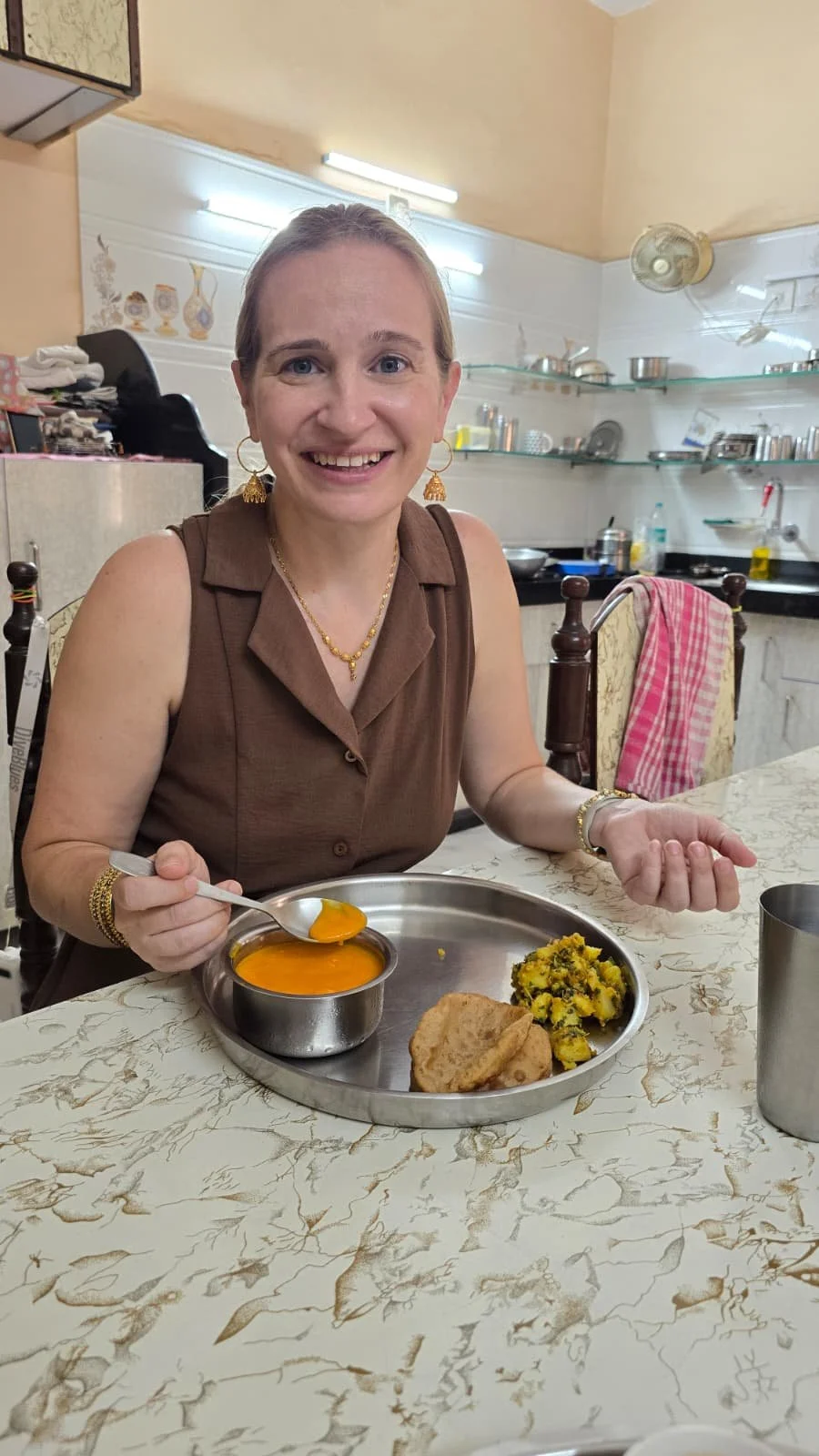
About the Author
Jessica Maisuria Parker Oliver is the founder and Clinical Director of Aspire Counseling. She's specialized in the treatment of anxiety since 2013, and she believes people's lives get smaller when fear is in charge — and bigger when they learn to face it.
Jessica married into a wonderful Indian family, and trips like the one that inspired this post have stretched her in ways she's deeply grateful for. She's always looking for the moments when it's safe and worthwhile to lean in, and she encourages the people around her to do the same.
What she loves most about this work is watching effective anxiety treatment open doors her clients thought were closed for good. Their lives change. Their confidence grows. And their world gets a little bigger.